
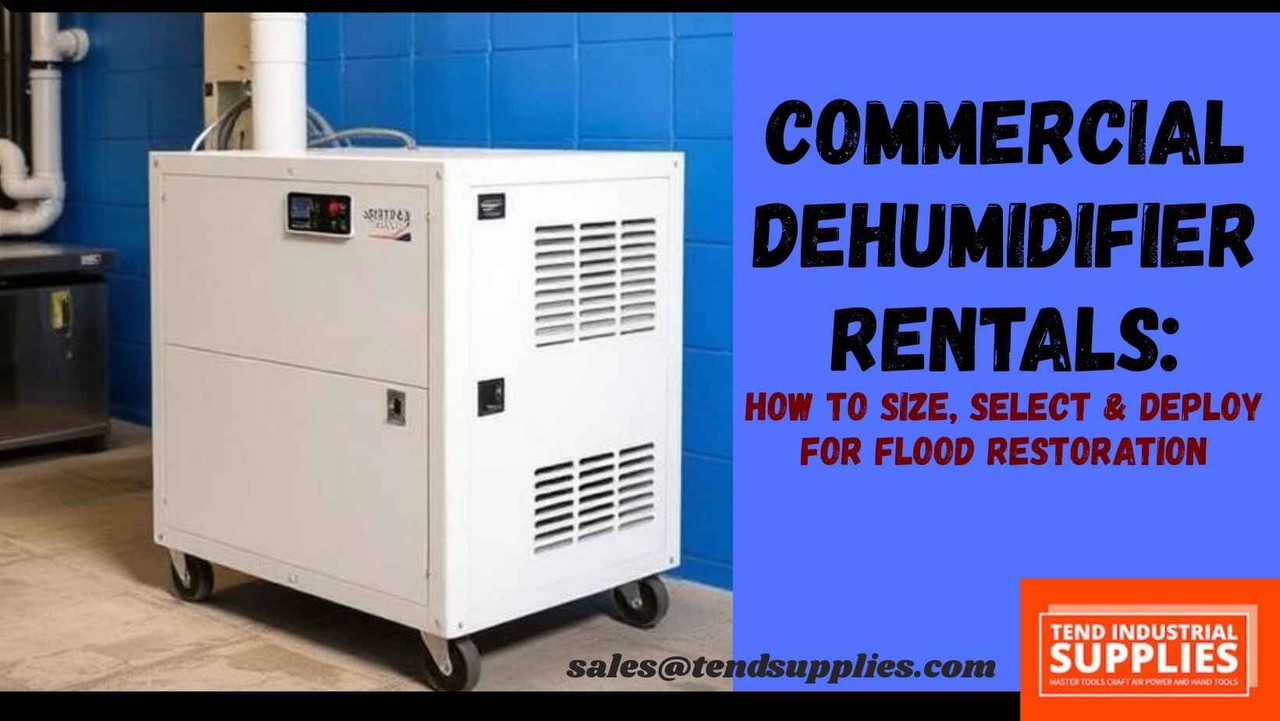
Commercial Dehumidifier Rentals: How to Size, Select & Deploy for Flood Restoration

On a rainy spring morning in Houston, a local warehouse woke up to several inches of standing water after an unexpected storm surge. The facility manager knew that every hour of delay in removing moisture could lead to costly mold growth and structural damage. This is where commercial dehumidifier rentals became the lifeline, helping restoration professionals quickly remove excess water, protect valuable assets, and restore the property efficiently.
Within this expert-backed resource, “Commercial Dehumidifier Rentals: How to Size, Select & Deploy for Flood Restoration”, we’ll walk you through everything you need to know to choose the right dehumidifier, calculate the proper size, and deploy units effectively to ensure a fast, safe, and compliant water damage recovery process. Whether you’re managing a small office, a large industrial facility, or a multi-story commercial property, these strategies are designed to help contractors and facility managers worldwide tackle flood restoration like a pro.
Quick Answer
Commercial dehumidifier rentals provide flexible, powerful solutions for flood restoration. Selecting the right size, type, and deployment strategy ensures faster drying times, reduces secondary damage, and meets industry standards.
Key Takeaways:
-
Accurate Sizing is Crucial – Correctly calculate the moisture load and affected space to select a dehumidifier that efficiently removes water and prevents secondary damage.
-
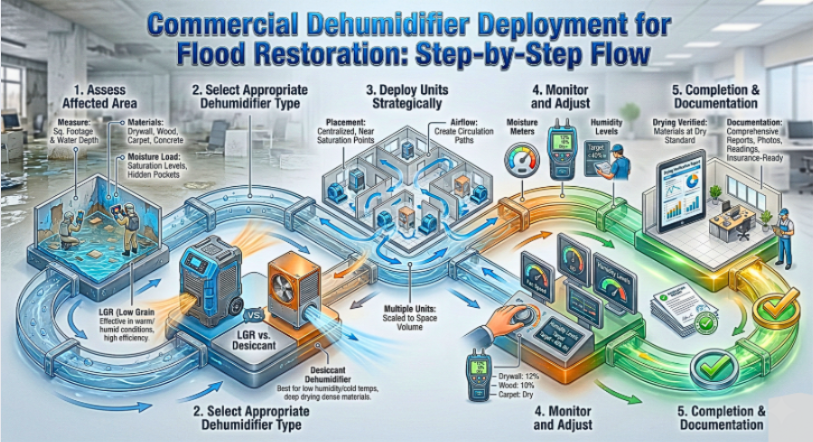
Choose the Right Type – Refrigerant (LGR) dehumidifiers excel in warm, humid conditions, while desiccant units perform best in low-temperature or low-humidity environments.
-
Strategic Deployment Boosts Efficiency – Proper placement, airflow management, and coordination with air movers accelerate drying times and reduce the risk of mold growth.
-
Commercial Rentals Offer Flexibility – Renting high-capacity dehumidifiers is cost-effective, scalable, and maintenance-free, making it ideal for short-term flood restoration projects.
-
Monitor Progress & Ensure Compliance – Use moisture meters and follow safety standards to track drying, protect property, and maintain documentation for insurance purposes.
Why Choose Commercial Dehumidifier Rentals for Flood Restoration
Renting commercial dehumidifiers offers multiple advantages for restoration projects:
-
Cost-Effective: Avoid large upfront purchases for short-term projects.
-
Access to High-Capacity Units: Industrial-grade dehumidifiers for large-scale water damage.
-
Flexibility: Scale your equipment based on the extent of flooding or seasonal demand.
-
Maintenance-Free: Rental units are typically maintained by the supplier, saving time and labor.
For professionals in North America, Europe, and Asia, commercial rentals also allow compliance with local regulations for water damage restoration.
How to Size a Commercial Dehumidifier
Correct sizing is critical to ensure effective moisture removal and prevent secondary damage such as mold and structural decay.
Step 1 – Assess the Flood Area
Measure the square footage, ceiling height, and type of materials affected (carpet, drywall, concrete). Consider:
-
Severity of water intrusion: Standing water vs. high humidity.
-
Affected surfaces: Porous materials absorb more moisture.
-
Airflow considerations: Open spaces vs. partitioned rooms.
Step 2 – Determine Moisture Load
Use the industry-standard formula:
Moisture Load (pints/day) = Volume of affected space × Material moisture factor × Humidity differential
Rental providers often provide load calculators to simplify this step.
Step 3 – Match Dehumidifier Capacity
Dehumidifiers are rated in pints per 24 hours. Choose a unit that exceeds your calculated moisture load for optimal drying. For large commercial spaces, industrial dehumidifiers can remove 100–300+ pints/day efficiently.
Rent high-capacity dehumidifiers now at Tendsupplies.com
Selecting the Right Commercial Dehumidifier
Not all rental units are the same. Key factors to consider include:
Refrigerant vs. Desiccant Dehumidifiers
-
Refrigerant (LGR) Dehumidifiers: Best for warm, humid environments; ideal for flooded homes, offices, and warehouses.
-
Desiccant Dehumidifiers: Perfect for low-temperature or low-humidity conditions; effective in basements, cold storage, and industrial spaces.
Portability & Noise Levels
Commercial rentals vary in weight and mobility. Consider:
-
Caster wheels and handles for easy deployment.
-
Noise output, especially for occupied commercial properties or sensitive facilities.
Additional Features
-
Built-in hygrometers and humidity controls
-
Continuous drainage vs. tank collection
-
Energy-efficient models to reduce operational costs
Deploying Commercial Dehumidifiers Effectively
Proper deployment maximizes efficiency and reduces drying time.
Step 1 – Position Strategically
-
Place units near the most saturated areas.
-
Avoid blocking airflow.
-
In large spaces, use multiple units evenly distributed.
Step 2 – Monitor & Adjust
-
Use moisture meters and data loggers to track progress.
-
Adjust fan speeds and unit placement as drying continues.
-
Coordinate with air movers for better air circulation.
Step 3 – Safety & Compliance
-
Follow local safety guidelines for electrical load and water exposure.
-
Ensure rented units are inspected and certified.
-
Document drying process for insurance claims.
Frequently Asked Questions (FAQs)
1. What size commercial dehumidifier do I need for flood restoration?
Answer: The right size depends on the square footage, ceiling height, type of affected materials, and severity of water damage. Calculate the moisture load and choose a unit rated slightly above your needs for optimal drying. Industrial units typically remove 100–300+ pints/day, suitable for large commercial spaces.
2. Should I rent or buy a commercial dehumidifier for flood restoration?
Answer: Renting is usually more cost-effective for short-term projects. Commercial dehumidifier rentals provide high-capacity units, maintenance-free operation, and flexible deployment. Buying may only make sense for frequent, long-term restoration work.
3. What is the difference between LGR and desiccant dehumidifiers?
Answer: LGR (Low Grain Refrigerant) dehumidifiers are ideal for warm, humid environments and water-damaged spaces, while desiccant dehumidifiers excel in low-temperature or low-humidity conditions, such as basements or cold storage. Selecting the right type ensures faster and more efficient drying.
4. How should commercial dehumidifiers be deployed for maximum efficiency?
Answer: Place units near the most saturated areas without blocking airflow. Use multiple units in large spaces and coordinate with air movers for optimal circulation. Monitor humidity levels with moisture meters and adjust placement or fan settings as drying progresses.
5. Can commercial dehumidifier rentals prevent mold growth?
Answer: Yes. By quickly and efficiently removing excess moisture from flooded areas, commercial dehumidifiers reduce the risk of mold, mildew, and structural damage. Consistent monitoring ensures the space dries completely, meeting industry restoration standards.
6. Are commercial dehumidifier rentals available worldwide?
Answer: Many rental providers offer global coverage, making high-capacity units accessible in North America, Europe, Asia, and beyond. Rentals provide flexible solutions for contractors, facility managers, and restoration professionals, regardless of project location.
Related Articles:
- Industrial Equipment Rentals: Complete 2025 Guide for Contractors, Facility Managers & Restoration Pros
- The Complete Guide to Pressure Testing: Methods, Tools, and Best Practices (2025 Edition)
- Industrial Air Compressor Buyer’s Guide: How to Choose the Perfect System in 2025
- Heavy Equipment Maintenance Tools: Regional Industry Focus
- HEPA Air Scrubber Rentals vs. Buying: Which Is Better for Restoration Projects?
Conclusion
Ultimately, “Commercial Dehumidifier Rentals: How to Size, Select & Deploy for Flood Restoration” provides the essential strategies for efficiently managing water damage in commercial and industrial spaces. By accurately sizing dehumidifiers, choosing the right type, whether LGR or desiccant and strategically deploying units with proper airflow and monitoring, restoration professionals can accelerate drying times, prevent mold growth, and protect valuable assets. Utilizing high-capacity commercial dehumidifier rentals, combined with proper moisture monitoring and safety compliance, ensures cost-effective, reliable, and scalable solutions for flood restoration projects worldwide. Whether you’re tackling water damage in warehouses, office buildings, or industrial facilities, following these best practices will maximize efficiency and results.
Ensure fast, efficient, and safe water damage recovery with commercial dehumidifier rentals from Tendsupplies.com Our high-capacity units are perfect for warehouses, offices, and industrial facilities, delivering reliable moisture removal when it matters most.
For personalized guidance, rental inquiries, or bulk orders, contact our experts directly at sales@tendsupplies.com Don’t wait, protect your property, prevent mold growth, and streamline your flood restoration projects with the right dehumidification solutions today!

Newest Guide & products Updates
Revolving Storage for Small Parts: The UNITEDPOWER Rotating Hardware Storage Bin Solution
For the dedicated hobbyist, electronics enthusiast, or meticulous crafter, the challenge is always t...

Declutter Your Workshop: The Magic of a 30-Bin Wall-Mounted Storage Organizer
A messy workshop is an inefficient one. Time wasted searching for the right screw, nut, or washer is...

Proper Torque for Perfect Fastening: Why a 1/2-Inch Drive Torque Wrench is Essential
In automotive repair and mechanical work, the idea of tightening a bolt until it feels “good-n-tight...

Why Jack Stands Are Non-Negotiable for Automotive Work
In automotive repair, safety is not optional, it’s essential. Every year, serious injuries occur bec...

Lift Safely: Choosing the Right Floor Jack for Modern Cars
Lifting a vehicle is the gateway to a huge range of automotive maintenance and repair tasks, from si...

Light Up Your Workspace: Choosing the Best LED Work Light for Any Job
Working in a poorly lit space is not just frustrating; it’s a recipe for mistakes and accidents. Whe...