
Compact Air Impact Wrench for Tight Automotive Spaces: SI-1610SR Buying Guide

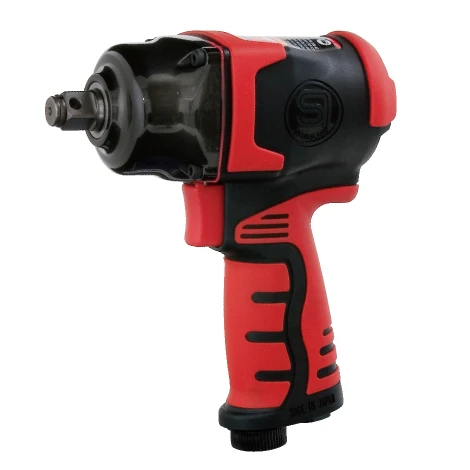
Buy a compact air impact wrench when access and manageable tool weight matter—but only after checking that its performance suits the fastening work. The Shinano SI-1610SR is a 1/2-inch-drive candidate for that decision: Shinano publishes 450 Nm maximum torque and a 1.04 kg tool weight. Those figures support a specific buying discussion; they are not a promise that the tool will remove every seized fastener.
This guide helps automotive workshops and maintenance teams decide whether the SI-1610SR belongs in the bay, what to measure before ordering and when a different tool is the more sensible purchase.
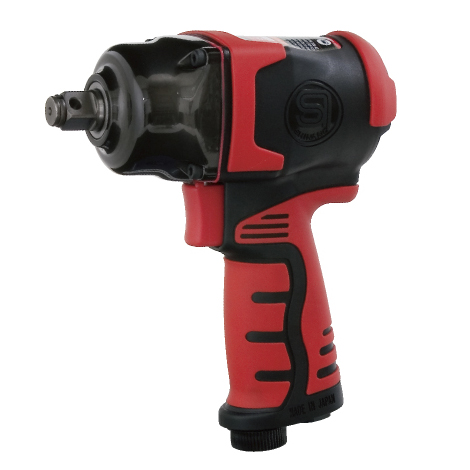
Manufacturer specifications to use when comparing
| SI-1610SR specification | Published value | What it means for the buyer |
|---|---|---|
| Square drive | 1/2 inch | Match the impact-rated socket interface |
| Maximum torque | 450 Nm / 332 ft-lb | A manufacturer rating, not a guaranteed removal result |
| Working torque range | 0–320 Nm | Not a substitute for controlled final tightening |
| Weight | 1.04 kg / 2.29 lb | Compare the complete working setup as well as the bare tool |
| Free speed | 8,000 rpm forward; 8,500 rpm reverse | No-load speed, not measured productivity |
| Average air consumption | 3.8 CFM | Do not substitute this for continuous-demand data |
| Published hose size | 10 mm / nominal 3/8 inch | Check length, couplers and pressure drop too |
Source: Shinano’s SI-1610SR manufacturer specifications. Use the supplied tool’s instructions for installation, operating limits and maintenance. Confirm the current specification when buying a different suffix or revision.
When this compact impact is a sensible shortlist choice
Consider the Shinano SI-1610SR compact 1/2-inch impact wrench when your existing impact is awkward to position, you repeatedly handle it in constrained work areas, and the proposed model’s performance is suitable for the fasteners involved. Its purchasing case is a fit between the work, the operator and the available air—not a claim that smaller always means better.
For a general automotive bay, record the jobs the tool must cover and the difficult jobs handled by another tool. That distinction prevents a compact daily-use purchase from being judged against occasional heavy breakaway work it was not selected to perform.
For fleet maintenance, distinguish passenger and light-vehicle work from larger commercial fasteners. Drive size alone is not a capacity rating, and “fleet use” does not turn a compact impact into a substitute for every heavy-duty wrench.
Measure the tool-plus-socket space, not just the housing
Before ordering, check the distance from the fastener to the nearest obstruction with the required socket in place. Include any adapter or extension you actually intend to use. Compare that working arrangement with a manufacturer drawing or confirmed dimensions for the supplied tool.
Also check the approach angle, hand clearance, access to the direction control and space for the hose fitting. A compact body can still be the wrong purchase when a long socket or stiff hose prevents a straight approach. An extension may solve one access problem while changing the working behaviour, so do not assume every configuration will perform identically.
The most useful quote request contains one or two representative photographs and measurements, not merely the vehicle brand. Access varies with the actual component, socket and working position.
Make sure the air system will support the purchase
Shinano’s published average air-consumption figure is useful for comparison, but it should not be multiplied by an invented factor or treated as the complete demand under continuous use. Confirm the relevant running-air information and follow the operating pressure specified in the tool’s instructions.
Assess the entire path: compressor delivery, filtration, regulator, quick couplers, hose diameter and hose length. Use the Tend air-tool specification calculator as a planning aid with verified inputs, not as proof of a particular tool’s tested performance.
A restriction can make a capable impact appear weak. Buying a second tool without checking the air path may reproduce the same problem. Where the shop needs air-treatment equipment as part of the order, consult our air-preparation guide for auto repair shops and include the tool models and simultaneous demand in the enquiry.
When to choose something else
| The purchase problem | Better buying direction |
|---|---|
| Repeatedly seized or much larger fasteners dominate the work | Request a tool matched to the breakaway requirement instead of choosing by compactness alone |
| The socket and housing cannot approach the fastener correctly | Reassess the tool form and access method before placing the order |
| No practical compressed-air supply is available | Compare a suitable non-pneumatic solution rather than adding an unsuitable air setup |
| The job requires a documented final tightening value | Use the specified controlled-tightening process; an impact power setting is not certification |
What to confirm on the order
Request the exact SI-1610SR model, quantity, anvil/socket-retention arrangement, included accessories, applicable warranty terms and expected delivery. Ask for confirmation before relying on a photograph to establish whether a fitting, muffler, oil or case is supplied.
Compare the complete cost of the working setup, including suitable sockets and air connections. This article deliberately sends you to the product or quotation route for price and availability rather than printing a stock count or dispatch guarantee that can become outdated.
Frequently asked questions
Is the SI-1610SR suitable for wheel service?
Shinano describes wheel-changing use, but suitability still depends on the vehicle, fastener condition and air supply. Complete wheel installation using the vehicle’s specified tightening procedure.
Will 450 Nm remove every seized bolt?
No. A published maximum rating does not guarantee a result on corrosion, damaged threads or an overtightened joint.
Can I use normal chrome hand-tool sockets?
Use sockets and accessories rated for impact service and suitable for the tool. Follow the tool and accessory manufacturers’ safety instructions.
Is 3.8 CFM enough information to choose the compressor?
No. It is an average-consumption figure. The actual usage pattern and running supply conditions must also be considered.
Can I request a matched tool-and-air-preparation quote?
Yes. Include the tool, hose details, existing compressor information, quantity and application so Tend can discuss the complete requirement.

Newest Guide & products Updates
Air Regulators for Paint Booths: What to Buy Before You Order
For a paint-booth spray-air branch, buy a correctly sized filter-regulator without an oil-mist lubri...
Best 3/8-Inch Air Ratchet for Mechanics: SI-1205B or SI-1218EX?
Choose the Shinano SI-1205B when a light, compact 3/8-inch air ratchet is the priority; compare the...
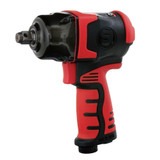
Compact Air Impact Wrench for Tight Automotive Spaces: SI-1610SR Buying Guide
Buy a compact air impact wrench when access and manageable tool weight matter—but only after checkin...
WAALPC FRL Replacement Filters: Match the Part Before You Buy
Buy a replacement FRL filter element by its confirmed model family and dimensions—not by the words “...
Shinano 5-Inch Air Grinder Review: M14 vs 5/8-11 Spindle
Tend Industrial Knowledge Center / Product comparisons Looking for the best 5-inch air angle grinde...
Premium Air Impact Wrenches: Shinano vs CP, Dynabrade & Ingersoll Rand
Hero: original AI-generated editorial illustration; pictured tools are not exact product models. A s...