
High-Velocity Drying Fans: How to Choose the Right Air Mover for Fast Water Damage Restoration (2026 Guide)


When water damage strikes, every minute matters. Whether you’re dealing with a flooded room, burst pipe, or post-construction moisture, choosing the right drying equipment can mean the difference between a quick recovery and costly mold remediation. In, “High-Velocity Drying Fans: How to Choose the Right Air Mover for Fast Water Damage Restoration (2026 Guide)”, you’ll learn exactly how to select, size, and deploy the best air movers for fast, efficient drying, so you can restore spaces quickly, safely, and professionally.
That’s where high-velocity drying fans (air movers) come in.
If you’re searching for:
- “high-velocity drying fan rental near me”
- “best air mover for water damage restoration”
- “how many drying fans do I need for a room”
This complete 2026 guide will help you choose the right equipment, deploy it effectively, and get professional-grade drying results fast.
Quick Answer:
High-velocity drying fans (air movers) are used to speed up water damage restoration by increasing airflow across wet surfaces, accelerating evaporation, and reducing drying time. For best results, use one air mover per 10–16 linear feet of wall space and combine with dehumidifiers.
Key Takeaways:
- High-velocity drying fans accelerate evaporation from wet surfaces
- Best results come from combining air movers + dehumidifiers + air scrubbers
- Use 1 air mover per 10–16 linear feet of wall space
- Choose centrifugal fans for restoration jobs and axial fans for large open spaces
- Renting is often the fastest and most cost-effective solution
What Are High-Velocity Drying Fans and How Do They Work?
High-velocity drying fans, also called air movers, are specialized industrial fans designed to force air across wet surfaces, accelerating evaporation. Drying isn’t just about heat, it’s about air movement + moisture removal.
Find High-Velocity Drying Fans for rent, visit Tendsupplies.com
Air Movers vs Dehumidifiers:
- Air movers → Increase evaporation
- Dehumidifiers → Remove moisture from air
- Best practice → Use both together
Without airflow, drying is slow and ineffective
Types of High-Velocity Drying Fans: Which One Do You Need?
Choosing the right type is critical for performance.
1. Centrifugal Air Movers (Best for Restoration)
Features:
- High pressure airflow
- Low-profile design
- Multiple positioning angles
Best For:
- Carpet drying
- Wall and floor drying
- Tight indoor spaces
Verdict:
Best choice for water damage restoration professionals
2. Axial Air Movers (Best for Large Areas)
Features:
- High airflow volume (CFM)
- Moves air over long distances
Best For:
- Warehouses
- Large open rooms
- Ventilation projects
Verdict:
Ideal for large-scale drying and airflow circulation
CFM vs Static Pressure: What Really Matters?
Understanding specs helps you choose the right fan.
CFM (Cubic Feet per Minute)
- Measures air volume
- Higher CFM = more airflow
Static Pressure
- Measures force of airflow
- Important for pushing air into carpets and walls
Pro Tip:
- Use centrifugal fans for high pressure
- Use axial fans for high volume
How Many Air Movers Do You Need for Water Damage Restoration?
Air Mover Sizing Rule:
Use 1 air mover per 10–16 linear feet of wall space
Example: A 20×20 ft room requires 5–8 air movers
Factors That Affect Quantity:
- Severity of water damage
- Type of material (carpet vs concrete)
- Airflow obstruction
You typically need one air mover for every 10 to 16 feet of wall space to effectively dry a water-damaged room.
How to Use High-Velocity Drying Fans Properly (Step-by-Step)
Fast Drying Setup Guide
- Extract standing water first
- Place air movers at 15–45° angles
- Create circular airflow patterns
- Add dehumidifiers immediately
- Monitor moisture levels continuously
Expert Tip:
Proper setup can reduce drying time by 30–50%
“Based on real-world restoration practices used by contractors and facility managers…”
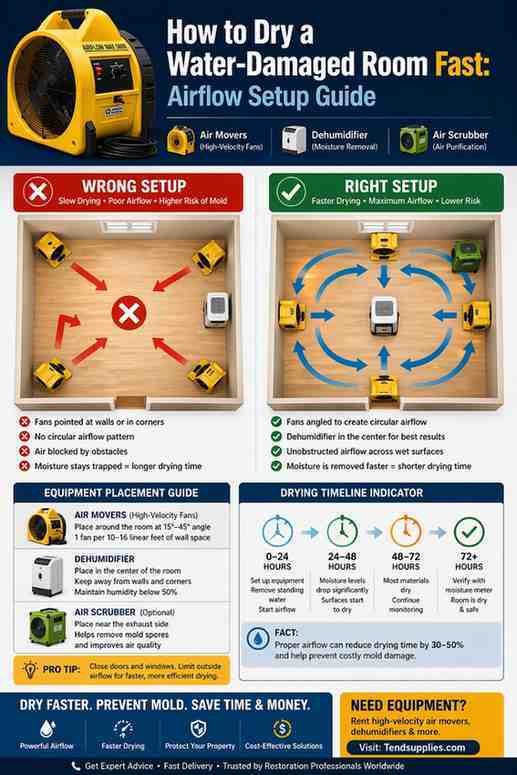
Correct vs Wrong Airflow Setup for High-Velocity Drying Fans
Common Mistakes That Slow Down Drying
Avoid these costly errors:
- ❌ Using too few air movers
- ❌ Poor or random placement
- ❌ Not using dehumidifiers
- ❌ Ignoring humidity levels
- ❌ Turning equipment off too early
These mistakes can double drying time and increase mold risk
Should You Rent or Buy High-Velocity Drying Fans?
Why Renting Is the Smart Choice
- ✔ Same-day availability
- ✔ Lower upfront cost
- ✔ Access to industrial-grade equipment
- ✔ No maintenance required
Ideal for:
- Contractors
- Facility managers
- Emergency restoration jobs
Where Are High-Velocity Drying Fans Used Globally?
- Flood and water damage restoration
- Construction drying
- Facility maintenance
- Disaster recovery
- HVAC airflow management
Best Equipment Combination for Fastest Drying (Golden Trio)
For maximum efficiency, combine:
- Air Movers → Evaporation
- Dehumidifiers → Moisture removal
- Air Scrubbers → Air purification
This is known as the Golden Trio in restoration
For Rental Pricing Guide check here
Frequently Asked Questions (FAQs)
What is a high-velocity drying fan used for?
It is used to speed up evaporation from wet surfaces, reducing drying time and preventing mold growth.
How many air movers do I need?
Use 1 air mover per 10–16 linear feet of wall space, depending on damage severity.
What is the fastest way to dry a flooded room?
Use air movers + dehumidifiers together to increase evaporation and remove moisture efficiently.
Can I use regular fans instead?
No, air movers provide higher airflow and pressure, making them far more effective.
Where can I rent high-velocity drying fans near me?
From trusted suppliers like Tend Industrial Supplies, offering fast delivery and expert support.
Related Articles:
The Contractor’s Guide to Water Damage & Mold Remediation: Renting the “Golden Trio”
HEPA Air Scrubber Rentals vs. Buying: Which Is Better for Restoration Projects?
Commercial Dehumidifier Rentals: How to Size, Select & Deploy for Flood Restoration
Expert Summary: Best Setup for Fast Water Damage Drying
The fastest way to dry a water-damaged space is to use high-velocity air movers placed every 10–16 feet, combined with commercial dehumidifiers to remove airborne moisture.
This setup:
- Accelerates evaporation
- Reduces drying time
- Prevents mold growth
Conclusion
In “High-Velocity Drying Fans: How to Choose the Right Air Mover for Fast Water Damage Restoration (2026 Guide)”, the key to success is simple: choose the right air mover, use enough units, and deploy them correctly.
Whether you’re comparing the best high-velocity air mover for flood restoration, planning a commercial drying fan rental for large rooms, or calculating how many air movers you need per square foot, your goal is to maximize airflow and minimize downtime.
Bottom Line:
Use the right setup, and you’ll achieve:
- Faster drying
- Lower mold risk
- Reduced repair costs
At Tend Industrial Supplies, you get:
- Commercial-grade air movers ready for immediate deployment
- Expert guidance on choosing the right drying equipment
- Fast, reliable solutions for restoration professionals worldwide
Get professional-grade drying equipment now:
Don’t let water damage get worse.
Available for Immediate Rental:
Contact Tend Industrial Supplies today:
- Visit: TendSupplies.com
- Email: sales@tendsupplies.com
Act Fast, Restore Faster, Prevent Mold, Save Costs
Whether you need a high-velocity drying fan rental near you or a complete drying setup, Tend Supplies has you covered.

Newest Guide & products Updates
Air Regulators for Paint Booths: What to Buy Before You Order
For a paint-booth spray-air branch, buy a correctly sized filter-regulator without an oil-mist lubri...
Best 3/8-Inch Air Ratchet for Mechanics: SI-1205B or SI-1218EX?
Choose the Shinano SI-1205B when a light, compact 3/8-inch air ratchet is the priority; compare the...
Compact Air Impact Wrench for Tight Automotive Spaces: SI-1610SR Buying Guide
Buy a compact air impact wrench when access and manageable tool weight matter—but only after checkin...
WAALPC FRL Replacement Filters: Match the Part Before You Buy
Buy a replacement FRL filter element by its confirmed model family and dimensions—not by the words “...
Shinano 5-Inch Air Grinder Review: M14 vs 5/8-11 Spindle
Tend Industrial Knowledge Center / Product comparisons Looking for the best 5-inch air angle grinde...

Premium Air Impact Wrenches: Shinano vs CP, Dynabrade & Ingersoll Rand
Hero: original AI-generated editorial illustration; pictured tools are not exact product models. A s...